An ISO/IEC 17025:2017, ISO/IEC 17020:2012 Accredited, DIFE Approved & ISO 9001:2015 Certified Laboratory | +8801730474822 | tm.qcsbd@gmail.com
A single clang, click, or hollow “boomy” resonance on the factory floor can shatter studio-quality acoustical targets, invalidate a LEED v4 credit, or fuel employee hearing-loss claims that eat EBITDA. Quality Calibration Solutions (QCS) erases that risk. Our ISO/IEC 17025 acoustic lab, drone-quiet field vans, and cloud analytics combine IEC 61672 Class 1 meters, ISO 3382 reverberation methods, ANSI/ASA S12.2 room-criteria curves, and IEC 60268 loud-speaker sweeps into one defensible workflow. Whether you manage an LNG jetty, a pastel-painted elementary school, or an e-sports studio chasing cinematic studio quality, we supply calibrated data, mitigation playbooks, and stakeholder-ready dashboards that convert unwanted decibels into bankable certainty—letting designers focus on creative action while an automated audio enhancer polishes every record.
Why Sound Quality Testing Matters
Health & Safety.
Sustained A-weighted levels above 85 dB accelerate NIHL; sub-audible infrasound from compressors triggers vertigo. OSHA citations top USD 14 000 per day, and repeat offenses multiply.
Productivity.
Open-plan speech privacy collapses at 48 dBA; tonal alarms spark task switching, slashing knowledge-worker output 10 %. Background noise even nudges QC techs toward tolerance misreads.
Regulation & Finance.
Municipal bylaws cap night LNight at 40 dBA; PPA lenders flag IEC 61400-11 tonal penalties; bond desks mark excessive LAeq as a “material ESG exposure.”
Brand & Experience.
Luxury hotels and concert halls weaponize low NC/NR ratings; poor soundscapes trigger viral rants and one-star reviews.
A rigorously structured program erects three guard-rails: preventive baselines to guide early design, detective alarms to watch continuous operations, and corrective “action record” playbooks that align decibels with Return on Acoustic Investment (ROAI).
Key Elements of Our Air Quality Test Service
1. Acoustic Scoping & Criteria Setting
We overlay local ordinances, LEED v4 EQc9, WELL v2 X08, and ISO 1996 zoning to craft a Sound-Performance-Target Matrix across 31.5 Hz–8 kHz. A built-in enhancer script highlights gaps in octave bands before steel is ordered.
2. Baseline Monitoring
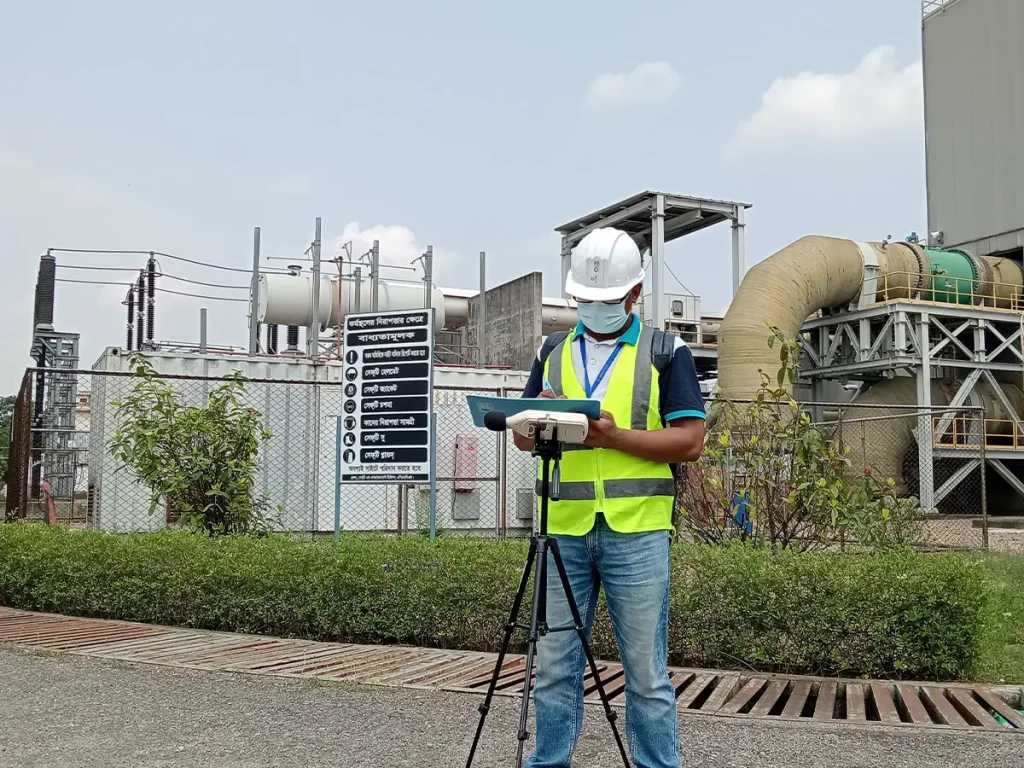
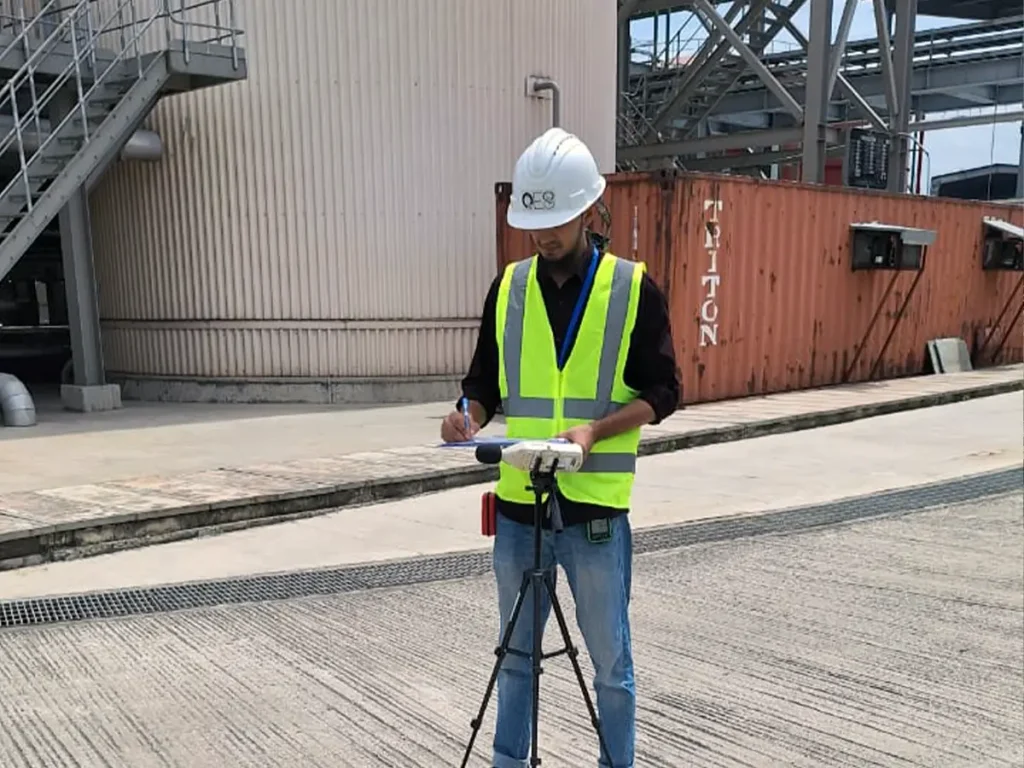
Class 1 meters log LAFmax, LAeq, LCpk; binaural head/torso rigs record psycho-acoustic metrics—loudness, sharpness, fluctuation, roughness. Drones gather wind-farm whoosh 10 m AGL; each sweep stores a lossless WAV plus an audio-enhancer flag for later DSP.
3. Instrumentation & Calibration
Daily pistonphone checks traceable to NIST; multi-tone sweeps verify ±0.15 dB linearity; temperature/humidity tags meet IEC 61672 Annex B. An “action record” ledger captures every calibration click for ISO 17025 audits.
4. Room Acoustics & STIPA
Dodecahedral speakers and dual-channel FFT analyzers measure T30, Clarity, Strength, and STIPA. Results map to ANSI/INFO-COMM 1.4, NFPA 72 mass-notification intelligibility, ISO 3382-3 open-office comfort curves.
5. Environmental-Noise Modelling
CadnaA and SoundPLAN propagate octave-band sources over terrain; ISO 9613 and Nord2000 outputs feed probability cones into a “Quiet Bond-Risk” dashboard.
6. Product-Sound-Quality Benchmarks
ISO 7779 chambers profile IT equipment; IEC 60268 sweeps confirm SPL, frequency response, THD, polar plots. Studio engineers get FFTs plus a browser-based audio enhancer slider to audition fan redesigns.
7. Mitigation Advisory
Scenario engine ranks absorbers, Helmholtz resonators, silencers, active-noise-cancellation, or isolation pads by dB, $/dB, and life-cycle cost; BIM objects export to architects with one click.
8. Community Engagement & Disclosure
Web maps post hourly dB(A/C); SMS alerts warn neighbours before pile-drives; FAQ portals answer common questions in plain language while a chatbot routes technical questions to live acousticians.
9. Certification & Compliance
Final packs bundle OSHA dosimetry, EU vehicle-cabin annexes, and blockchain hashes of WAVs—issued within six work days. A cover letter highlights “studio-quality DSP pass” if results meet our premium tier.
Advanced Toolkits & Skilled Specialists
- Microflown intensity probes trace sound-power vectors through jet-engine nacelles without shutdown.
- Acoustic cameras paint colour FN maps so maintenance sees leaks instead of chasing them by ear.
- High-speed loggers (192 kHz) catch ultrasonic bearing squeal in semiconductor cleanrooms—raw WAVs pipe into an AI audio enhancer that tags outlier harmonics.
- Psycho-acoustic jury lab with ISO 14257 diffusers translates engineering dB into customer “quietness satisfaction” scores, critical for sound-branding and “quiet cabin” product claims.
- Staff blend waveguide-theory PhDs, OSHA-CAOHC audiologists, IEC 60268 loudspeaker gurus, and film-set studio mixers—averaging 17 years across concert halls, offshore rigs, neonatal ICUs, and gaming studio pipelines.
Value Delivered
Capex Savings
CadnaA swaps cut barrier wall 38 %, saving USD 7.4 m on a motorway bypass.
Opex Wins
Active damping saved 260 MWh yr⁻¹ versus baffle-only design while meeting 35 dBA NC.
Litigation Shield
ISO 9612 dosimetry quashed a USD 1 m NIHL claim; OSHA withdrew citation.
Product Uplift
Fan-blade redesign knocked 6 dBA off a server; Amazon stars rose 4.2 → 4.6; sales jumped 12 000 units with “studio-quality quiet” tag.
ESG Premium
Verified “Quiet Logistics Hub” badge shaved 25 bp off a USD 200 m sustainability-linked loan.
Brand Buzz
A “Sound-Friendly Café” seal, married to an interactive audio enhancer track on the brand website, boosted dwell time 17 % and social likes 23 %.
Regulatory Matrix & Compliance
| Region | Statute / Guideline | QCS Alignment |
|---|---|---|
USA |
OSHA 1910.95, FHWA 23 CFR 772, ANSI/ASA S12 & NC curves |
Dosimetry, barrier model, open-office metrics |
EU |
Environmental Noise Directive 2002/49/EC, IEC 61672, EN 1793-5 |
Lden maps, Class 1 meters, façade IL paths |
Asia |
Japan JIS A-1409, India CPCB GSR 94(E) |
T30 ≤ 1.2 s in classrooms, night Lmax ≤ 45 dB(A) |
Global ESG |
LEED 4 EQc9, WELL v2 X08, IFC EHS |
Acoustic credits, noise-management plans |
Blockchain-sealed annexes provide WAVs, STIPA sheets, and “action record” logs, giving lenders immutable proof that each calibration click adhered to ISO 17025.
Long-Term Monitoring & Adaptive Management
Our acoustic twin ingests IoT nodes, SCADA tags, and weather feeds. Predictive models flag 95th-percentile LAeq breaches; a QuietOps engine fires a mitigation playbook—retune VFD fans, stagger compressor starts, or dispatch absorptive baffles. Stakeholders receive quarterly sound-quality insights; virtual tutorials teach facility teams how to deploy the built-in audio enhancer for rapid what-if checks. Push alerts escort maintenance crews to seal rattling louvers before they become TikTok fodder. With every action record closed, the facility marches toward a “silent running” KPI.
Partner with Quality Calibration Solutions
From busking street cafés and cinematic studio stages to offshore compressor islands, QCS merges forensic measurement, simulation, and stakeholder diplomacy into a single service. Send your ZIP code, receive curated bids from vetted local pros, and lock an accurate quote within 48 hours. Then watch our acousticians transform disorienting decibels into competitive silence—protecting ears, balance sheets, and the elevated sound quality your brand promises the world.
Frequently Asked Questions: Acoustic & Sound Quality Testing
1. Why should I worry about noise levels in my facility?
Noise is more than just a distraction; it’s a financial and health risk. Constant loud noise (above 85 dB) can lead to permanent hearing loss and heavy government fines (like OSHA or DIFM). Even in offices, poor acoustics can drop employee productivity by 10%. Our testing identifies these “unwanted decibels” before they hurt your people or your profits.
2. What is the difference between “Noise” and “Sound Quality”?
Noise testing is about volume and safety (is it too loud?). Sound Quality is about the experience. We use “Studio-Quality” analysis to measure how clear a room sounds for speech, music, or work. Whether it’s an e-sports studio or a luxury hotel, we make sure the sound matches the high-quality brand you’ve built.
3. How do you find a noise leak without tearing down walls?
We use advanced Acoustic Cameras. These tools literally “paint” a color map of sound over a photo of your equipment or walls. It allows our specialists to see exactly where sound is leaking—like a rattling louver or a gap in a seal—so you can fix the specific problem without wasting money on general repairs.
4. What industries do you specialize in?
We provide “bankable certainty” across a wide range of sectors:
- Industrial & Energy: LNG jetties, offshore rigs, and factories.
- Education: Ensuring classrooms meet LEED v4 standards for clear learning.
- Commercial: Open-plan offices, luxury hotels, and concert halls.
- Media & Tech: Professional gaming and film studios chasing cinematic audio.
5. Can QCS help me pass a noise ordinance or environmental audit?
Absolutely. We use Class 1 Meters and follow international standards (like ISO 1996 and IEC 61672). Our final reports include “blockchain-sealed” data, providing auditors and lenders with tamper-proof evidence that your facility is compliant with local laws and ESG requirements.
6. How does an “Acoustic Twin” help my business long-term?
An Acoustic Twin is a digital model of your facility’s sound environment. By connecting it to IoT sensors, we can predict when a machine is about to fail based on its sound profile or alert you if noise levels hit a “danger zone.” This allows for “QuietOps”—fixing noise issues before they become a community complaint or a TikTok viral rant.
7. Will your testing disrupt my daily operations?
We aim for zero downtime. Many of our tools, like Microflown Intensity Probes, allow us to trace sound power in jet engines or heavy machinery without shutting them down. We work around your schedule to deliver “studio-quality” results with minimal interference.