An ISO/IEC 17025:2017, ISO/IEC 17020:2012 Accredited, DIFE Approved & ISO 9001:2015 Certified Laboratory | +8801730474822 | tm.qcsbd@gmail.com
Accredited Environmental Testing Services for Accurate Site Assessment and Compliance
Quality Calibration Solutions (QCS) is a premier, accredited laboratory providing a comprehensive suite of environmental testing services. Our certified analyses are essential for environmental consultants, engineers, developers, and industrial facility managers who need accurate, reliable, and legally defensible data. We deliver the scientific certainty required to manage environmental liabilities, ensure regulatory compliance, protect public health, and make critical decisions with confidence.
Our laboratory operates in full conformance with ISO/IEC 17025 and national programs like the National Environmental Laboratory Accreditation Program (NELAP), ensuring our results are trusted by regulatory agencies and stakeholders worldwide.
Why is Accurate Environmental Testing Critical?
In an era of heightened environmental awareness and stringent regulation, understanding the precise chemical makeup of soil, water, and air is fundamental to responsible business operations. A professional environmental test, documented by an accredited certificate of analysis, is not just a data point—it is the bedrock of sound environmental risk management.
Protecting Public Health and Ecosystems
The foremost reason for environmental testing is to safeguard human health and the natural world. Contaminants like lead in drinking water, volatile organic compounds (VOCs) from industrial sites, or harmful bacteria can pose serious, long-term health risks to communities. Similarly, pollutants can devastate local ecosystems. Accredited environmental testing is the scientific tool used to identify these invisible threats, quantify their extent, guide effective cleanup strategies, and confirm that a site is safe for its intended use.
Guaranteeing Regulatory Compliance
A complex network of federal, state, and local laws governs environmental protection. Regulations like the Clean Water Act, Clean Air Act, and the Resource Conservation and Recovery Act (RCRA) impose strict limits on discharges and disposals and mandate specific monitoring and testing schedules. A certified test report from an accredited laboratory is the official, required evidence to demonstrate compliance to regulators like the EPA. It is a non-negotiable part of maintaining your permits and your legal license to operate.
Enabling Project Development and Real Estate Transactions
No major project or property transaction proceeds without environmental due diligence. Testing is a cornerstone of this process. Phase II Environmental Site Assessments (ESAs), required when contamination is suspected, are built entirely around soil and groundwater testing. Securing permits for construction, dewatering, or industrial discharge is impossible without certified analytical data. Professional testing provides the foundational information that allows projects to be designed safely, financed confidently, and approved by planning authorities.
Reducing Liability and Litigation Risk
In the event of a contamination discovery, a legal dispute, or a regulatory enforcement action, impartial, scientifically sound data is your strongest defense. An environmental test report from an accredited lab, supported by an unbroken chain-of-custody, provides an objective record of site conditions at a specific point in time. This legally defensible evidence is crucial for fairly allocating liability in real estate deals, defending against third-party lawsuits, and minimizing the immense financial and reputational damage that can result from environmental disputes.
Our Comprehensive Environmental Testing Capabilities
QCS provides a full spectrum of analytical services, employing EPA-approved methodologies and advanced instrumentation to deliver precise, accurate, and reliable data for all environmental media.
Types of Matrices and Analytes We Test
Our laboratories are equipped to analyze thousands of compounds in virtually any sample type, including:
- Water Analysis:
- Drinking Water: Testing for lead and copper, bacteria (total coliforms, E. coli), VOCs, disinfection byproducts, and PFAS.
- Wastewater/Effluent: Compliance monitoring for NPDES permits, including BOD, COD, TSS, nutrients (total nitrogen, total phosphorus), pH, oil & grease, and metals.
- Groundwater & Surface Water: Site investigation for petroleum hydrocarbons (TPH), solvents, pesticides, herbicides, and heavy metals.
- Soil, Sediment & Sludge Analysis:
- Site Remediation: Testing for semi-volatile organic compounds (SVOCs), PCBs, polynuclear aromatic hydrocarbons (PAHs), and RCRA 8 metals.
- Brownfield & Real Estate: Comprehensive analysis for site characterization and risk assessment.
- Air & Gas Analysis:
- Vapor Intrusion Studies: Testing for VOCs in sub-slab soil gas and indoor air using summa canisters.
- Ambient Air Monitoring: Analysis for criteria air pollutants to support air quality permits.
- Waste Material Analysis:
- Hazardous Waste Characterization: Performing the Toxicity Characteristic Leaching Procedure (TCLP) to determine if waste must be managed under strict RCRA regulations.


Our Advanced Analytical Process and Standards
We adhere strictly to official, published methodologies from the EPA (SW-846, 600 Series) and Standard Methods for the Examination of Water and Wastewater. Our internal Quality Management System governs every step of the process.
Our standardized laboratory workflow includes:
- Sample Logistics & Chain of Custody: We provide pre-preserved sample kits and initiate a strict, legally defensible chain-of-custody (COC) form the moment a sample is collected.
- LIMS Accessioning: Upon arrival, every sample is logged into our Laboratory Information Management System (LIMS), which assigns a unique ID and tracks its progress.
- Advanced Instrumental Analysis: We utilize a suite of state-of-the-art equipment, including Gas Chromatography-Mass Spectrometry (GC-MS) for organic compounds, Inductively Coupled Plasma-Mass Spectrometry (ICP-MS) for trace metals, and Ion Chromatography (IC) for anions.
- Rigorous QA/QC Protocol: Every analytical batch is validated with a suite of quality control samples, including method blanks, laboratory control samples, duplicates, and matrix spikes.
- Data Review and Certification: A multi-level peer and management review process verifies all results, culminating in the issuance of a formal, certified Certificate of Analysis.
Flexible Service Delivery: Field Sampling Support and Laboratory Analysis
We offer integrated solutions to ensure the quality of your data from start to finish:
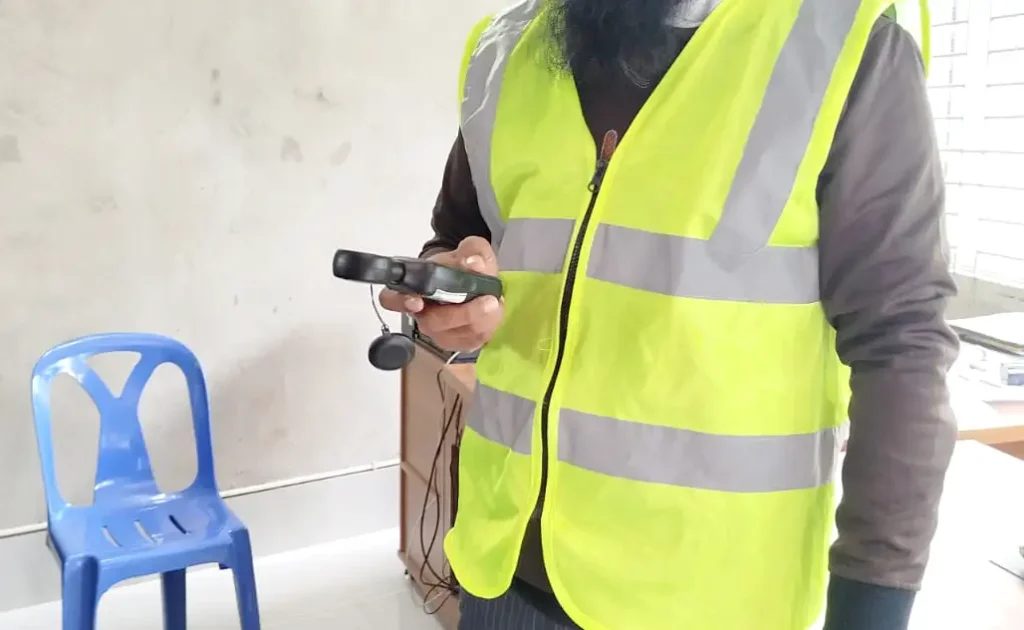
- Professional Field Sampling Services: Our trained and experienced field technicians can perform all necessary sample collection according to strict protocols. This eliminates sampling error and ensures the samples received by the lab are truly representative of site conditions.
Accredited Laboratory Analysis: Our core service, providing the precise, reliable, and legally defensible analytical data you need from our state-of-the-art testing facilities.
Industries That Rely on Accredited Environmental Testing
- Environmental Consulting: The fundamental data source for all site assessments, remediation, and due diligence.
- Construction & Land Development: For soil characterization, clean fill determination, and dewatering permits.
- Manufacturing & Industrial: For process water analysis, wastewater discharge compliance, and waste characterization.
- Government & Municipalities: For drinking water safety assurance, landfill monitoring, and public health investigations.
- Energy & Utilities: For power plant effluent, coal ash analysis, and substation site investigations.
Why Choose QCS for Your Environmental Testing Needs?
Uncompromising Quality and ISO/IEC 17025 Accreditation
Our accreditation to ISO/IEC 17025 is the highest international quality standard for testing and calibration laboratories. It is your ultimate assurance that our methods, equipment, personnel, and quality systems have been rigorously audited, producing data that is accurate, reliable, and legally defensible.
Fast, Reliable Turnaround to Meet Project Deadlines
We understand that project schedules are driven by data. Our standard turnaround times are among the fastest in the industry. For urgent needs, we offer a full range of expedited services, including next-day and same-day analysis, to ensure you never miss a critical deadline.
Comprehensive, Audit-Ready Certificates of Analysis
The Certificate of Analysis (CoA) we deliver is a clear, comprehensive, and compliance-ready document. It contains all the necessary information for regulatory submission: sample details, analytical results with units, method detection limits, QA/QC summaries, and method references. All reports are available 24/7 through our secure online data portal.
Service Performed by Expert Project Managers & Chemists
Our laboratory is staffed by a dedicated team of professional project managers, degreed chemists, and certified analysts. They possess deep expertise in analytical chemistry and environmental regulations and serve as a technical resource to help you plan your sampling events and understand your final results.
Frequently Asked Questions about Environmental Testing
What is a Certificate of Analysis (CoA)?
The CoA is the formal, certified report issued by the laboratory. It details the analytical results of the tests performed on your sample(s). It is the official record of the findings and is essential for regulatory reporting and legal documentation.
Why is proper sampling so important?
The data can only be as good as the sample. If a sample is collected from the wrong location, at the wrong depth, or in the wrong type of container, the laboratory’s results, no matter how accurate, will not be representative of the actual site conditions. A strict sampling plan and chain-of-custody are crucial.
What is a “detection limit”?
The Method Detection Limit (MDL) is the minimum concentration of a substance that can be measured and reported with 99% confidence that it is different from a blank sample. It is the threshold of “is it there or not?” The Reporting Limit (RL) or Quantitation Limit (QL) is a slightly higher concentration that represents the lowest level at which the substance can be accurately quantified.
How long do I need to keep environmental testing records?
Record-keeping requirements are set by regulators and vary by program, but they are often very long. For example, records related to hazardous waste sites or long-term monitoring permits may need to be kept for 30 years or even in perpetuity. Our secure data portal helps you meet these long-term archival obligations.
Get a Free, No-Obligation Quote for Your Environmental Testing
Get the scientific certainty you need to manage environmental risk, ensure compliance, and move your projects forward. Contact our team of expert project managers today to discuss your testing requirements and receive a detailed, no-obligation quote for our analytical services.